By Martin Egbo
Political representation should not be reduced to the simplistic question of, “What did the legislator personally build?” Such a question misunderstands the architecture of constitutional governance. A state legislator legislates, scrutinises, advocates, facilitates, represents constituents and deploys institutional influence to ensure that the needs of his people receive governmental attention.
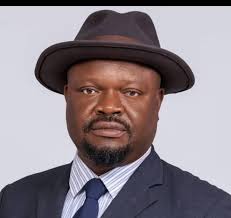
It is within this broader framework that the representation of Rt. Hon. Magnus Nnaemeka Edeh, representing Aninri State Constituency, deserves to be assessed.
His interventions have extended beyond legislative participation into the practical concerns of his constituents; employment, education, youth and women empowerment, agriculture, disaster response and constituency advocacy. His engagement around the Oduma–Nume Road illustrates an important dimension of representation: projects executed by the state government should not automatically be appropriated as the personal achievements of a legislator, but neither should legislative advocacy and facilitation be dismissed simply because the legislator did not physically execute the project.
In a functioning democracy, development is often the product of interconnected institutional processes; legislative advocacy, executive action, budgetary decisions and administrative implementation.
The same principle applies to his interventions on the erosion crises at Okpanku and cyclone disaster at Oduma, where he pursued governmental and institutional attention, including engagement with the National Emergency Management Agency (NEMA). Such interventions may not generate the spectacle of a commissioning ceremony, but they address a fundamental responsibility of representation: ensuring that vulnerable communities are not forgotten within the machinery of government.
Maybe more directly consequential to individuals have been his interventions in employment and education. Constituents have benefited from employment opportunities associated with institutions such as Parklane Hospital, ESUT and IMT, while scholarships and bursaries have provided educational assistance to students facing financial constraints. He has also supported youth and women empowerment, including agricultural interventions designed to strengthen economic participation and livelihood opportunities.
These interventions reveal a broader philosophy of representation: development is not exclusively about concrete structures; it is also about expanding human capability. A road improves connectivity. A scholarship preserves educational opportunity. Employment stabilises households. Agricultural empowerment creates productive capacity. Disaster intervention protects communities. Legislative advocacy gives constituency concerns institutional visibility.
Each represents a different pathway to public value. It is therefore important to distinguish between initiation, facilitation, appropriation, implementation and oversight. Not every project located within a constituency is personally executed by its legislator, just as the absence of a legislator’s name on a project does not automatically invalidate the possibility of his advocacy or facilitation.
The more intellectually honest question is: What has the representation made possible? Who gained employment? Who remained in school because assistance was available? Which community received governmental attention because its representative raised the issue? Which vulnerable groups gained access to empowerment opportunities? Which constituency concerns entered the legislative and executive policy process? These are the questions that elevate political assessment above partisan rhetoric.
Rt. Hon. Magnus Nnaemeka Edeh’s representation should therefore be understood not merely through the projects that carry his name, but through the cumulative influence of his legislative engagement, executive advocacy and constituency interventions. Political office is temporary. Roads will eventually require rehabilitation, governments will change, and legislators will leave office. But the opportunities created, the lives improved and the institutional interventions secured can endure far beyond the tenure that produced them.
The true measure of representation is not simply what the officeholder builds with his hands, but what his influence makes possible for his people. And ultimately, the seat is temporary; the impact is the real legacy….Magnus have been making the impact and will continue to do so.